
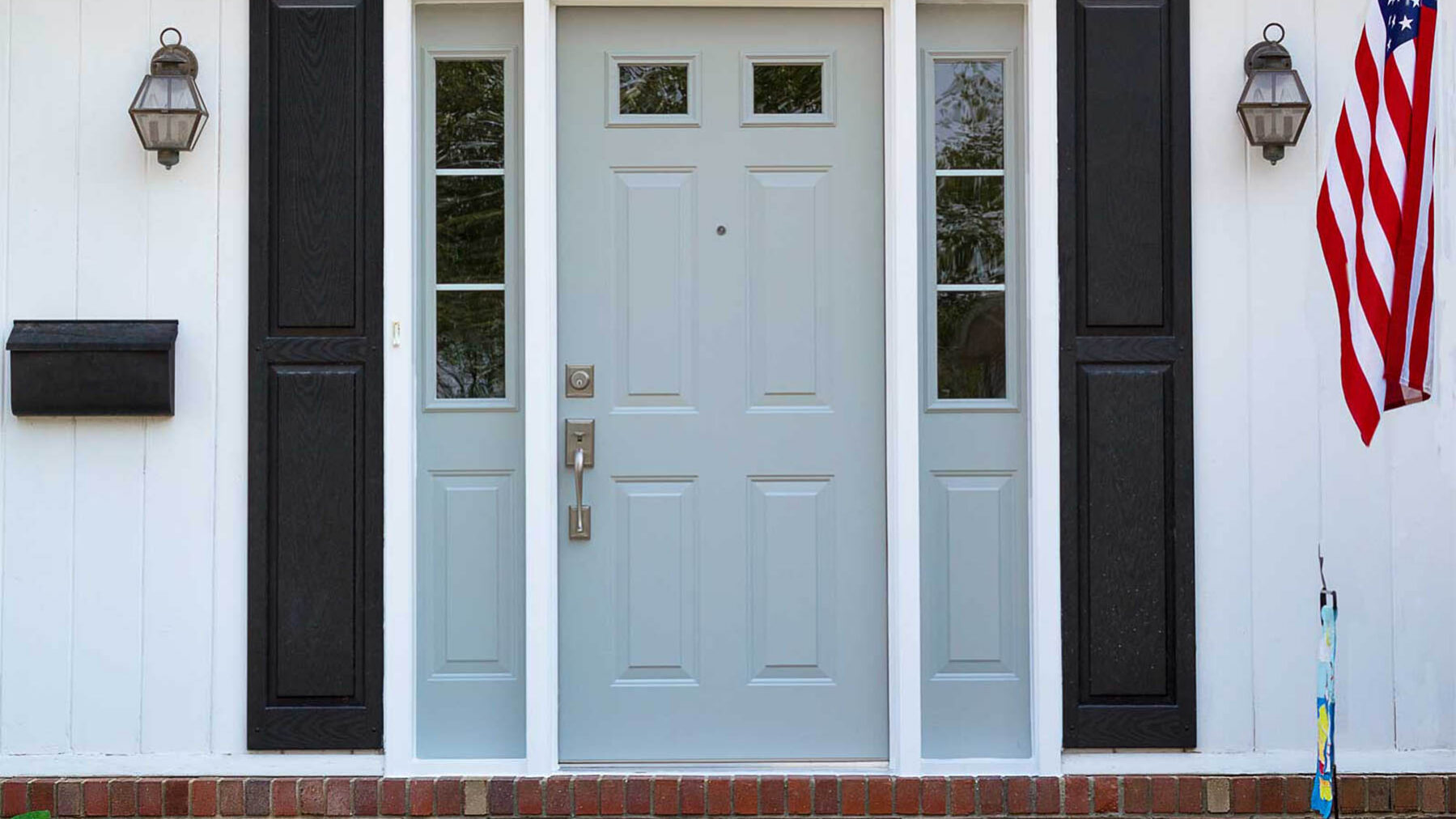
Both satin and semi-gloss paint can be great options for doors. When you’re painting an exterior door, semi-gloss is likely the better choice because it holds up better and can highlight the architectural features of your home’s facade. Satin can be a better choice for interior doors if you like a softer look, and it holds up better in low-traffic areas.
Table of Contents
- What are satin and semi-gloss paint finishes?
- Satin vs. semi-gloss paint for doors: Durability compared
- Best paint finishes for exterior doors
- Best paint finishes for interior doors
- Which door paint finish hides imperfections better?
- Need new door installation in Baltimore? Call Master Seal for expert installation
What are satin and semi-gloss paint finishes?
A satin finish delivers a smooth, velvety sheen with a subtle, refined glow. Its moderate reflectivity makes it a versatile choice for walls, trim, and low-traffic doors. Satin finishes are less glossy, usually falling between 25–35% reflectivity on the sheen scale.
In contrast, a semi-gloss finish offers a higher level of shine with enhanced light reflection. Renowned for its durability, moisture resistance, and ease of cleaning, it’s the perfect option for trim, cabinets, and frequently used doors. Semi-gloss finishes are shinier than satin, usually falling between 45–55% on the sheen scale.
Satin vs. semi-gloss for doors: Durability compared
Doors endure frequent handling, scuff marks, and potential exposure to moisture, so choosing a long-lasting finish is key. Here’s how satin and semi-gloss compare in terms of durability and longevity:
Durability and resistance to wear
While satin is durable, it’s more prone to scuffs and stains than semi-gloss. It’s a great choice for doors in low-traffic areas but may require more frequent touch-ups in busy spaces.
Semi-gloss offers a tougher surface that resists scratches and scuffs better than satin. Because of its higher sheen, it’s easier to wipe down and maintain, making it an excellent choice for frequently used doors.
Maintenance and cleanability
A satin finish is easier to clean than flat or matte finishes, but scrubbing too hard can leave visible marks. A semi-gloss finish is highly washable and resistant to moisture, making it ideal for kitchen, bathroom, and exterior doors that may require frequent cleaning.
Moisture and stain resistance
The satin finish offers moderate moisture resistance but may show signs of wear faster in humid environments. A semi-gloss finish provides better moisture resistance, preventing warping or damage over time, especially in high-humidity areas.
If longevity and durability are your top priorities, semi-gloss is the better choice for doors. Its ability to withstand wear and tear, ease of cleaning, and moisture resistance make it a more practical option for high-traffic and high-moisture areas. However, if you prefer a softer, more subtle look and are willing to do occasional touch-ups, satin can still be a viable option for lower-traffic doors.
By considering your household’s needs, the amount of foot traffic, and how much maintenance you’re comfortable with, you can confidently choose the best paint finish for doors that will stand the test of time.
Best paint finish for exterior doors
When you’re repainting exterior doors, semi-gloss is usually your top choice. Exterior doors face more demanding conditions than interior doors, including sunlight, rain, humidity, temperature swings, dirt, and daily use.
Semi-gloss is a smart choice for exterior doors because it offers:
- Better moisture resistance
- Easier cleaning
- Stronger resistance to scuffs and handprints
- Better durability in high-use areas
- A polished look that works well for entry doors
For a front door, semi-gloss can stand up to fingerprints, weather exposure, and routine cleaning. It also gives the door a slightly brighter, more finished appearance, which can improve curb appeal.
Satin can still be used on an exterior door if you prefer a softer, less shiny look. However, it may need more maintenance over time, especially on a front door that receives direct sun, rain, or frequent use.
Of course, choosing the right paint finish matters most when you’re repainting a door. Master Seal customers who choose a new steel entry door have another option: factory-applied colors and stains that do not require repainting.
Master Seal steel entry doors come in a wide palette of tasteful exterior colors. Homeowners can also choose stain finishes that mimic natural wood grain, from light oak to dark mahogany. Because these finishes are applied during manufacturing, you can get the look you want without having to choose between satin and semi-gloss paint yourself.
Explore Master Seal’s entry door colors and stains to see available finish options for your home.
Best paint finish for interior doors
The best paint finish for your interior doors depends on the room, the amount of traffic, and how often the door needs to be cleaned.
For high-traffic interior doors, semi-gloss is usually the better choice. It holds up well to frequent touching, wiping, and daily wear. Use semi-gloss for interior doors in busy areas such as hallways, bathrooms, kitchens, laundry rooms, mudrooms, and children’s rooms.
For low-traffic interior doors, satin may be a better fit. A satin finish creates a softer appearance with less glare, making it a good option for bedrooms, offices, guest rooms, closets, and decorative doors. It can also help create a more subtle look if you don’t want the door to stand out as much as the trim or cabinetry.
Here is a simple way to choose an interior door paint finish:
- Choose semi-gloss if the door is touched often, cleaned often, or exposed to humidity.
- Choose satin if the door is used less often and you prefer a softer appearance.
- Choose semi-gloss for bathroom, kitchen, laundry, and mudroom doors.
- Choose satin for low-traffic bedrooms, offices, closets, or decorative doors.
If you’re repainting interior or entry doors because they look worn, outdated, or damaged, it may be time to consider a replacement. A new door can improve the appearance, function, security, and energy efficiency of your home.
Learn more about Master Seal’s steel entry door styles in Baltimore if you’re ready for a more permanent upgrade.
Which door paint finish hides imperfections better?
As with your other considerations, door placement and traffic matter. Satin can hide minor imperfections better since it’s less glossy and reflects less light. Semi-gloss, on the other hand, reflects more light, making dents, surface flaws, old paint buildup, brush marks, and unevenness more noticeable.
However, keep in mind that a satin finish won’t stand up to moisture, handling, or cleaning as well. Even just scrubbing too hard can cause noticeable marks on satin paint.
Prep work can go a long way in hiding imperfections for both semi-gloss and satin finishes:
- Clean the door thoroughly
- Sand down any rough or uneven areas
- Fill dents, chips, or holes
- Prime the surface if your paint requires priming
- Use smooth, even coats
- Let each coat dry properly before adding another
For more design inspiration, explore these popular front door color trends.
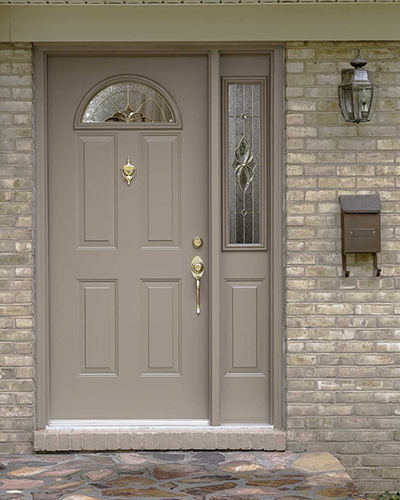
Satin Finish
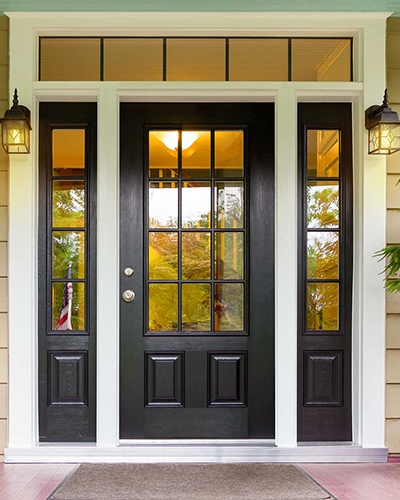
Semi-Gloss Finish
Need new door installation in Baltimore? Call Master Seal for expert installation
Since 1994, Master Seal has been the name DMV residents have called for door installation. Whether you’re upgrading for style, security, energy efficiency, or just easier maintenance, we can help you find the perfect fit.
We offer a wide variety of doors in a range of colors that you won’t need to paint or install yourself. Call 855.608.1580 or reach out to us online for a free in-home installation.