
Window seals play a critical role in your home’s energy efficiency by preventing drafts and helping keep indoor temperatures stable. They also help reduce external noise and keep dust and moisture out, keeping your home healthier and more comfortable.
Most homeowners don’t think about their window seals until something goes wrong. Foggy glass, condensation between panes, drafts, cold spots, or unexplained energy bill changes can all be signs of a window seal problem. This guide explains what window seals are, why they fail, how to spot the warning signs, and what to do when a window seal can no longer be saved.
For homeowners in Baltimore, Maryland, and greater Washington, D.C., Master Seal offers expert window installation and free estimates on window replacement when damaged seals are beyond repair.
What is a window seal?
A window seal is the airtight barrier that helps stop air, moisture, and temperature transfer through or between window panes, or between the window and its frame.
Window seals are typically made from durable materials such as rubber, silicone, synthetic foam, vinyl, or similar sealing materials. Each material is selected for its ability to withstand environmental stress while improving the energy efficiency and overall performance of the window.
The airtight and watertight seal reduces energy loss by minimizing heat transfer and prevents moisture damage that can lead to mold, frame deterioration, or other structural issues.
There are three main types of window seals homeowners should understand:
IGU seals
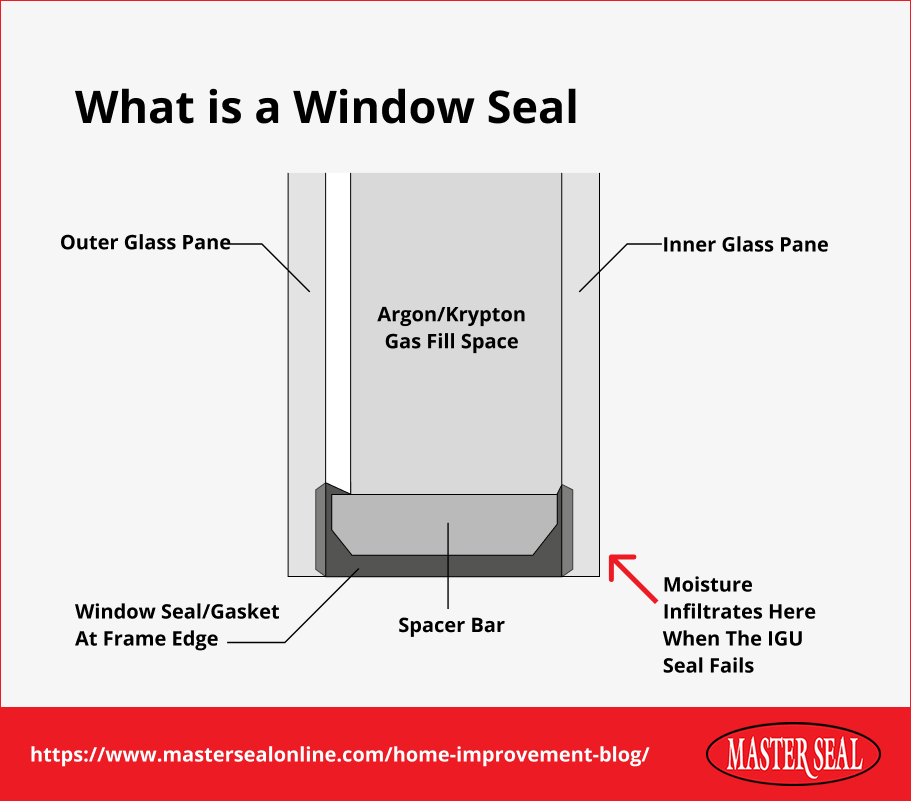
Insulated glass unit (IGU) seals are factory-installed inside double-pane or triple-pane windows. These seals hold insulating gas, such as argon or krypton, between the panes of glass. This gas-filled space improves insulation and energy efficiency.
When an IGU seal fails, moisture can enter between the panes, the gas fill can escape, and the window can lose much of its original insulating performance.
Gaskets
Window gaskets are flexible rubber seals that sit between the glass pane and the window frame. They help hold the glass securely in place while preventing water, air, and moisture from entering around the edges of the glass.
Weatherstripping
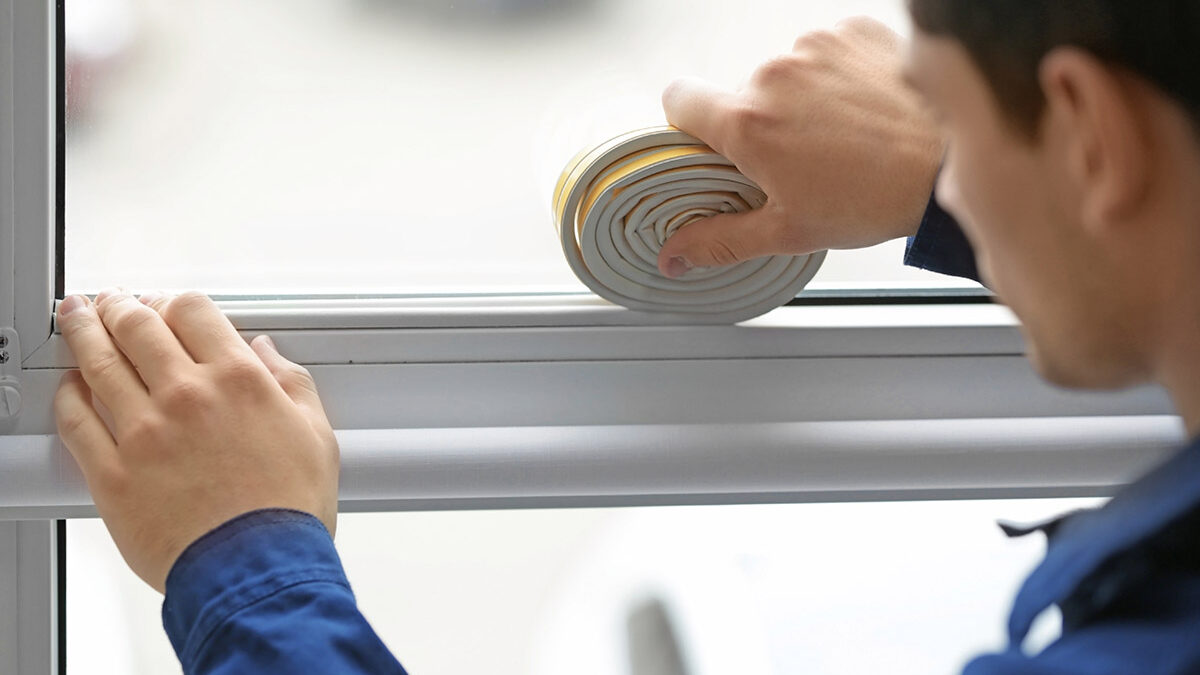
Window weatherstripping is made from foam, vinyl, rubber, or similar materials. It’s installed along movable sash and frame contact points to seal out drafts when the window is closed. Weatherstripping is especially important for comfort because it helps block outside air from entering your home.
How to tell if your window seal is failing
Here are five common warning signs of a broken window seal or window seal failure.
1. Foggy or cloudy glass between panes
Foggy or cloudy glass between panes is one of the clearest signs of a failed window seal. If the haze is trapped inside a double-pane or triple-pane window and cannot be wiped away from the inside or outside, the IGU seal has likely failed.
2. Condensation forming between glass layers
Condensation between glass layers is another sign of a failed window seal. Once moisture enters the insulated glass unit, it can collect between the panes and make the window look wet, cloudy, or streaked from the inside.
Condensation on the outside of the glass on cool mornings can be completely normal. Condensation between the panes that will not clear is different. That usually means the IGU seal has failed.
3. Distorted or wavy views through the glass
A failed window seal can sometimes cause the view through the glass to look distorted, wavy, or unclear. This may happen as the insulated glass unit loses its original pressure balance or as moisture affects visibility between the panes.
4. Drafts or cold spots near the window
Drafts or cold spots near the window, even when the window is fully closed, may point to a problem with the window seal, gasket, weatherstripping, or surrounding frame. Effective seals block external air and help maintain a consistent indoor temperature throughout the year.
5. Unexplained increases in heating or cooling bills
Window seals help reduce the amount of heat lost or gained through windows. When a seal fails, your heating and cooling system will work harder to maintain a comfortable indoor temperature.
In the Mid-Atlantic, window seals face added stress from seasonal temperature swings. Hot, humid summers and cold winters can create repeated expansion and contraction inside window panes. This process, sometimes called thermal pumping, gradually fatigues the seal as air heats and expands in summer, then cools and contracts in winter.
What causes window seal failure?
Even a well-made window seal can fail over time. Understanding what causes window seal failure can help you decide whether repair or replacement is the right next step.
- Age and normal wear: Most IGU seals last about 10 to 20 years, depending on the quality of the window, the original installation, exposure to sunlight and weather, and overall maintenance. As seals age, they can lose flexibility, weaken, or separate from the window components they are meant to protect.
- Thermal pumping: Thermal pumping is one of the most common causes of multi-pane window seal failure. As temperatures rise, the air inside the window unit expands. As temperatures drop, the air contracts. This repeated movement places stress on the seal.
- Poor original installation: Proper installation is essential for ensuring the longevity and effectiveness of windows in both residential and commercial buildings. If a window is not installed correctly, the seals may not sit properly or may experience uneven pressure.
- UV exposure: Direct sunlight can degrade sealant materials over time. Windows that receive intense sun exposure may experience faster breakdown of rubber, silicone, foam, or other sealing materials.
- Baltimore’s climate: Baltimore’s climate can be hard on window seals. Hot, humid summers, cold winters, moisture, and freeze-thaw cycles all compound wear. These conditions can place repeated stress on multi-pane window seals, weatherstripping, and frame gaskets.
- Manufacturing defects in lower-quality window units: Some window seal failures happen because of manufacturing defects or lower-quality window units. If an insulated glass unit was not made properly, the seal may fail earlier than expected.
Understanding the cause of the problem helps determine the best solution. Some seal issues can be repaired, while others mean the glass unit or full window may need to be replaced.
Can a broken window seal be repaired?
The honest answer is that it depends on which window seal failed.
Some window seal problems can be repaired. Others can’t be fully restored to their original performance.
When window seal repair may be enough
Weatherstripping and some frame gaskets can often be repaired or replaced. These parts are usually accessible and can be updated when they become worn, loose, cracked, or damaged.
If the issue is a draft around the sash or a worn strip of material where the window closes, a repair may help restore comfort and reduce air infiltration.
When replacement is needed
IGU seal failure is different. Once the seal between panes fails, the insulating gas fill can escape, and moisture can enter the glass unit. At that point, the original insulating performance of the window can’t truly be restored.
Some window seal repair companies may be able to temporarily reduce visible symptoms, such as fogging between panes. However, this doesn’t restore the original argon or krypton gas fill, and it doesn’t bring the window back to its original energy performance.
For a failed IGU seal, the only real long-term fix is replacing the glass unit or the window. Which option makes more sense depends on the age of the window, the condition of the frame, how many windows are affected, and whether the window is still performing well overall.
When window seal damage means it’s time to replace the window
If the IGU seal has failed, window replacement is often the path to a real, permanent fix. A new window can restore energy efficiency, eliminate foggy glass, improve comfort, and add curb appeal.
Here are signs that replacement may be the better call:
- The window is older than 15 to 20 years: If the window is already near the end of its expected lifespan, replacing it may be more practical than trying to continue repairing seal problems.
- Multiple windows are failing around the same time: If several windows are showing foggy glass, condensation between panes, drafts, or seal failure, the issue may be related to the age or quality of the windows throughout the home.
- There is visible frame damage alongside seal failure: If the window frame is damaged, warped, rotting, or no longer holding the window properly, repairing the seal alone may not solve the problem.
- Prior repair attempts have not held: If previous repair attempts haven’t stopped the fogging, drafts, or moisture issues, replacement may offer a more reliable long-term solution.
- Energy bills continue rising despite maintenance: A failed window seal can reduce energy efficiency. If your heating and cooling bills continue rising despite regular maintenance, your windows may no longer be performing the way they should.
If your window seal has failed and you are not sure whether repair or replacement is the right call, Master Seal can come out for a free in-home evaluation. We’ll have our team assess your windows and recommend the best next step.
Get a free estimate on window replacement in Baltimore and Maryland
Master Seal specializes in providing top-notch window installation services that maximize energy efficiency and enhance the comfort of your home or office. Our team of experienced professionals uses high-quality materials to ensure a proper airtight and watertight fit for every window. With our commitment to excellence and customer satisfaction, you can trust Master Seal to deliver superior results every time.
Call us today at 855.608.1580 or fill out a form for a free estimate and to schedule a no-obligation appointment with our team.
Interested in learning more about replacement window options? Read about vinyl replacement windows.