
French doors and hinged patio doors look similar but work differently. Both options bring in lots of natural light and add curb appeal to side or back doors. French doors have two opening panels with hinges on each door and require more clearance. Hinged-patio doors only have one opening panel with a hinge in the middle, but save space in your entryway.
What is a French door?
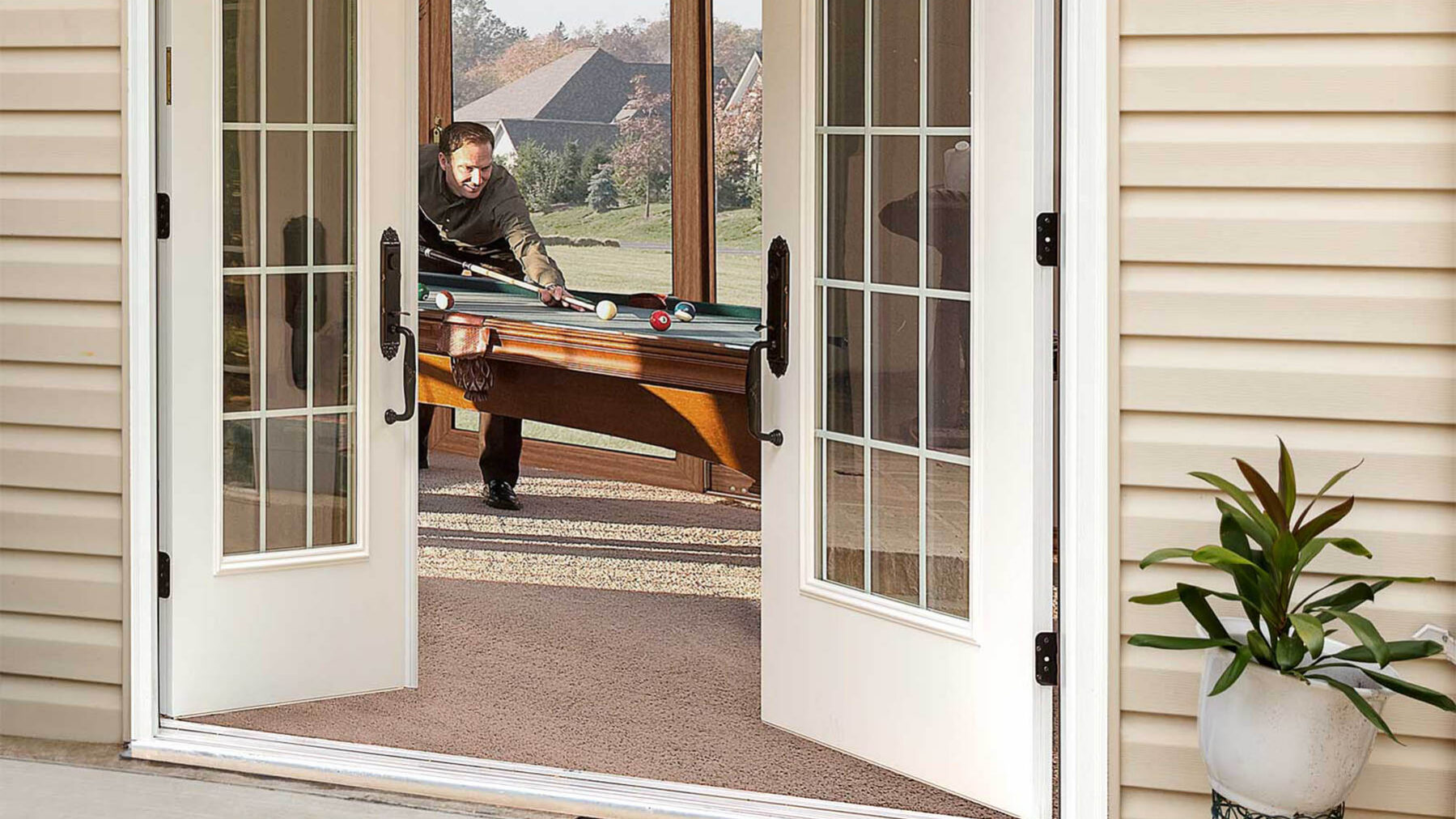
French doors are hung in a pair and open from the middle with a knob on each panel. They create a wide entryway and easy accessibility when open. Many French doors have large windows to let in natural light, making them great, elegant options for side or rear entryways, especially when leading to a porch or deck.
French doors can be styled in several different ways. Window sizes, materials, and colors can all be customized to fit the unique look of a home. Homeowners often opt for French doors when they want a large doorway to move furniture, connect outdoor and indoor spaces, and make the room look bigger than it is.
What is a center-hinged patio door?
At a glance, center-hinged patio doors look like French doors. They have two single doors that face each other. Unlike French doors, a center-hinged door:
- Has one functional and stationary door
- Opens from the center towards the stationary door
- Leaves more room for walkways and furniture in a room
When open all the way, a center-hinged patio door rests on itself, creating a single open doorway and an active door nestled behind a stationary door.
Hinged patio door vs. French door: Side-by-side comparison
Unlike sliding patio doors, center-hinged and French doors both swing from hinges to open into a space. They look similar and provide similar amounts of light and security, but their functionality is different. When choosing between a hinged patio door vs. a French door, it’s essential to keep in mind the way your entry space is used every day.
| Feature | Center-Hinged Patio Door | French Door |
|---|---|---|
| Door operation | One active panel and one fixed panel | Two active panels |
| Opening width | Standard single-door opening | Wider opening when both panels are open |
| Best for | Tight layouts, walkways, and furniture placement | Entertaining, moving items, and classic design |
| Swing clearance | More compact swing path | Requires clearance for two swinging panels |
| Appearance | Similar double-door look with one fixed panel | Traditional symmetrical double-door look |
| Security | Secure active panel with fixed panel support | Secure locking hardware where panels meet |
| Maintenance | Fewer moving panels | More active hardware and hinges to monitor |
How each door opens
French doors have two active doors that open and close from hinges on the side jambs. The panels meet in the center, and each door swings away from the other when opened. This creates a wide opening and a classic double-door effect.
A hinged patio door, on the other hand, opens more like a single active door. The active panel opens from the center toward the fixed panel. While the full door unit may look similar to French doors, only one side is used for daily entry and exit.
Space and clearance requirements
Center-hinged patio doors only need clearance for one active panel. This can be especially helpful in smaller dining rooms, kitchens, and living rooms where space is limited. Many Baltimore and Washington, D.C., area townhomes and rowhouses have compact rooms or tight walkways near rear entrances, so the swing path of the door matters.
French doors need room for two panels to swing. This can create a dramatic entryway in a larger room or a home where the patio entrance is kept clear. When both doors are open, the wide opening can make the home feel more connected to the outdoors and keep moving seasonal furniture simple. This is helpful for entertaining, moving large items, or creating a more open indoor-outdoor living experience.
Security and locking options
Both French doors and center-hinged patio doors can be secure when made with quality materials, paired with dependable hardware, and installed properly. Frame materials, glass, lock system, alignment, and installation quality are just as important as the style of door you choose.
Since the two panels of French doors meet in the center, the locking system and panel alignment are especially important. Many French door systems include hardware that secures one panel in place while the other is used for regular entry and exit. When both panels are closed, the doors should meet cleanly and lock securely. With center-hinged patio doors, the active door should close firmly into the frame, and the fixed panel should be properly secured.
Maintenance differences
Because French doors have two operable panels, there are more moving parts to maintain. Hinges, locks, handles, sweeps, weatherstripping, and the meeting point between the two doors should be well-maintained to stay secure and remain aligned.
Center-hinged patio doors have fewer active components because only one panel opens. The fixed panel still needs to remain secure and properly sealed, but has fewer components to maintain.
For both patio door types, routine maintenance may include:
- Cleaning the glass and frame
- Checking hinges and hardware
- Inspecting weatherstripping
- Watching for drafts or moisture near the door
- Making sure the door opens and closes smoothly
- Confirming that locks engage properly
- Keeping the surrounding threshold area clean
Best patio door options for your Baltimore home from Master Seal
The best patio door for your home depends on your layout, style preferences, and daily routine. A French patio door may be the right choice if you have the space and want a traditional double-door appearance with the ability to open both panels. This can be especially helpful if you regularly entertain, move furniture through the doorway, or want the widest possible opening to a deck, patio, or backyard.
A center-hinged patio door may be the better choice if you want the look and natural light of a double patio door but have a smaller space to work with. Because only one panel opens, this style can work well near dining tables, kitchen layouts, living room furniture, and tight walkways.
You should also think about the architectural style of your home. French doors may be a better choice if you have a traditional or older property and are looking to maximize curb appeal. Center-hinged patio doors can fit a wide range of home styles, but offer more functional flexibility for smaller spaces.
When choosing between patio door types, consider:
- How much swing clearance the room allows
- Whether you want one active panel or two
- How often you move furniture or large items through the doorway
- How the door will affect furniture placement
- Whether the door opens to a deck, patio, porch, or backyard
- How much natural light you want in the room
- Your preferred look, from classic to practical
- Security, locking hardware, and installation quality
- Long-term maintenance needs
Whether you’re remodeling a Baltimore rowhouse or want to add more functionality to your single-family home in the D.C. metro area, Master Seal has you covered. Since 1994, we’ve helped over 40,000 customers improve the value and security of their homes across the DMV.
Call 855.608.1580 or complete our online form to get a free, in-home estimate for your patio door redesign.